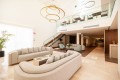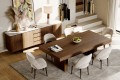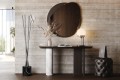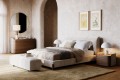
Mediterranean interior design is one of the most enduring aesthetics in residential design, defined by natural materials, warm palettes and a seamless connection between interior and exterior. This guide covers its origins, defining elements and how to incorporate the style into your next project.
The Origins of Mediterranean Interior Design
Mediterranean interior design has its roots in the countries that border the Mediterranean Sea: Greece, Italy, Spain and the south of France. The style was not designed, it evolved and was shaped by climate and available resources: thick stone walls for temperature regulation, wide openings for coastal breezes and pale surfaces to reflect southern light.
Wood, terracotta and ceramic were the materials at hand, chosen for practicality and refined through centuries of use. What remained was essential and built to last, which is precisely why the style has endured while trends have come and gone.
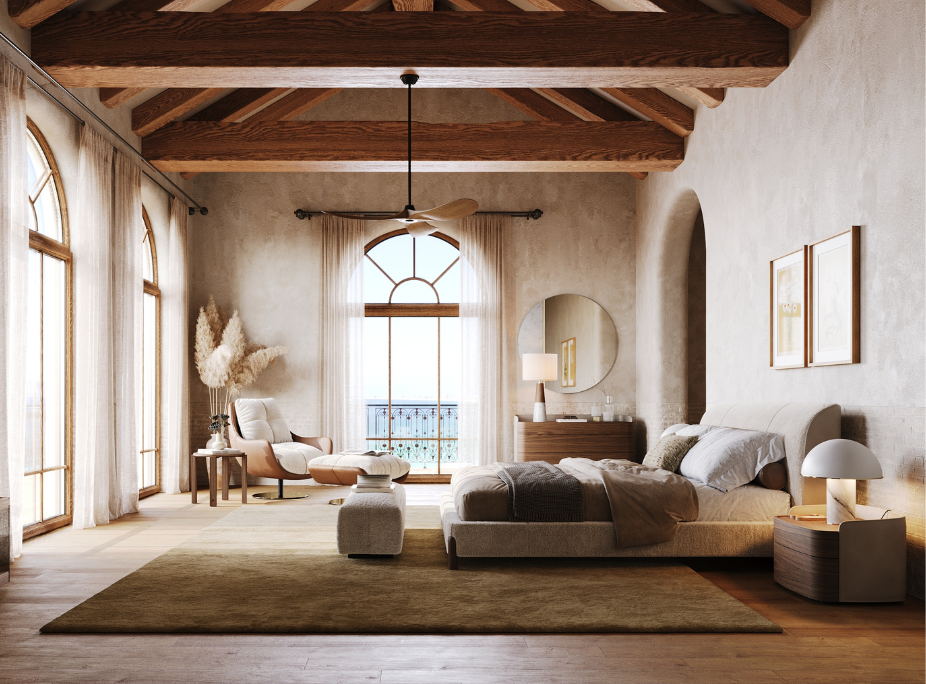
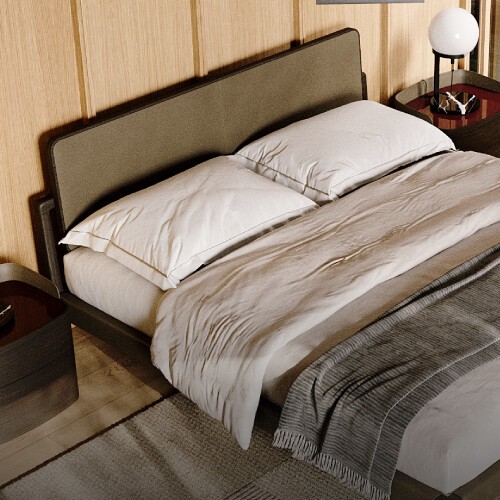
A bedroom shaped by thick walls, wide arched windows and light fabrics, the essence of Mediterranean design.
The Defining Elements of Mediterranean Interior Design
Colour Palette
The palette works in three layers: broken whites, warm beiges and sandy neutrals as the base, terracotta, olive green, warm grey and ochre as supporting tones, and blue or turquoise used sparingly as accents that evoke the sea without dominating the space. Colour anchors the room but does not compete for attention.
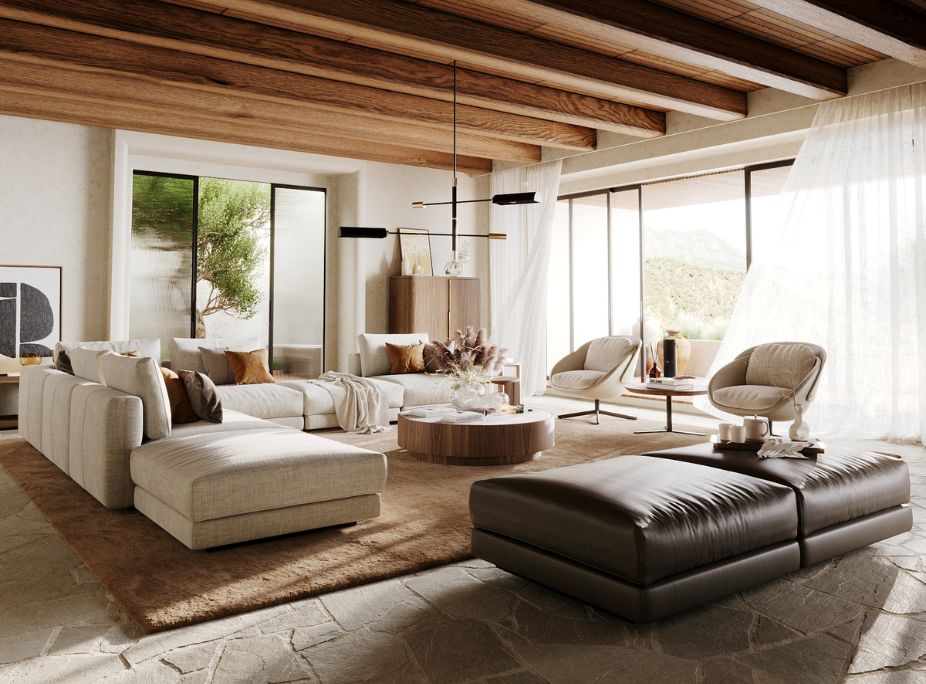
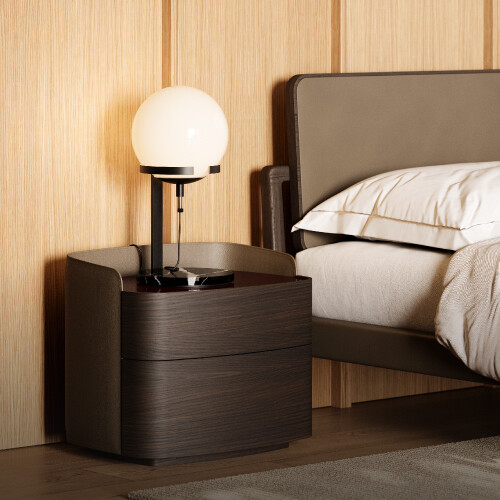
Broken whites and warm neutrals set the base, while leather and terracotta bring quiet depth.
Natural Materials
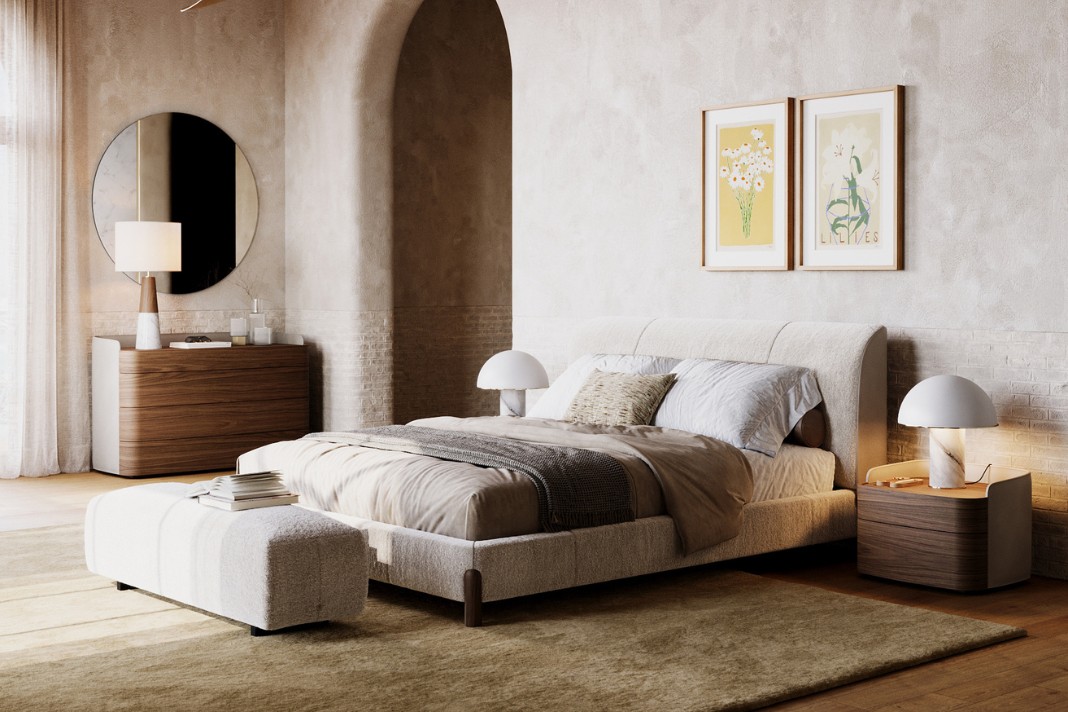
Solid wood, natural stone, rattan and wrought iron form the structural vocabulary of this style, ageing authentically and gaining character over time. At the same time, natural fibre textiles such as linen, cotton and jute add softness without visual weight.
For client projects, customising dimensions, finishes and upholstery across the same material family keeps the result coherent without uniformity.
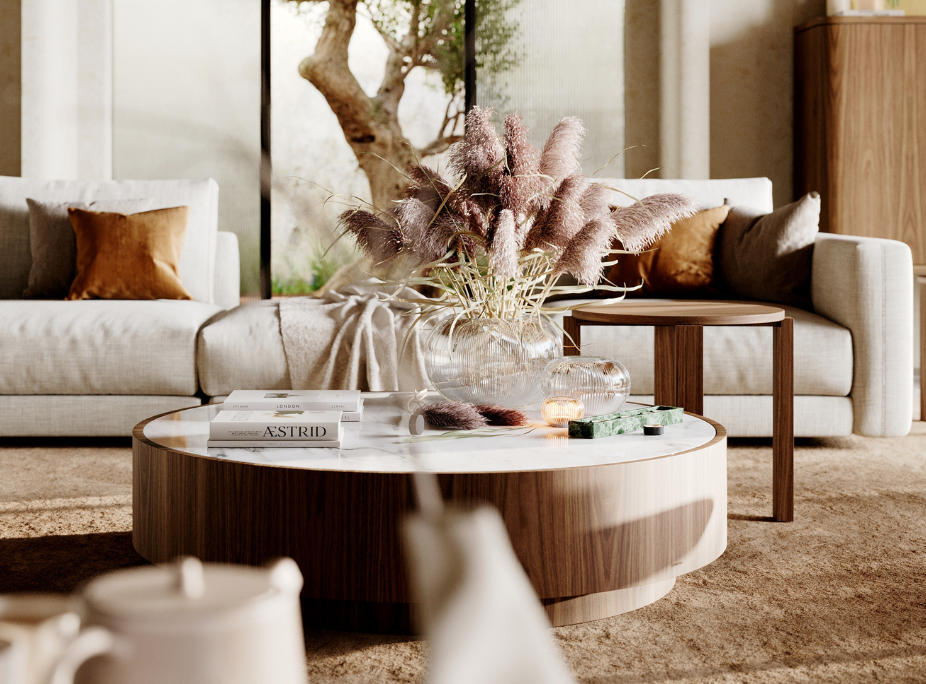
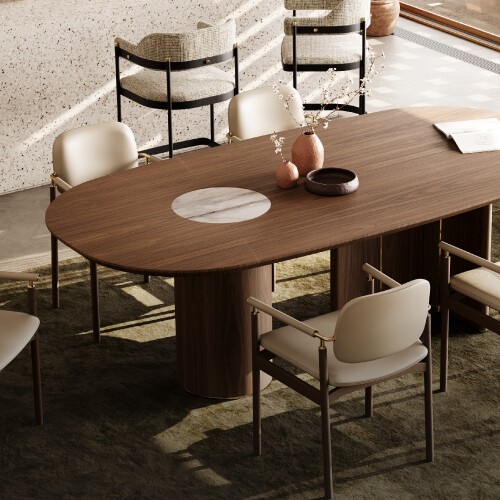
Wood and marble, materials that gain character with time rather than losing it.
Natural Light
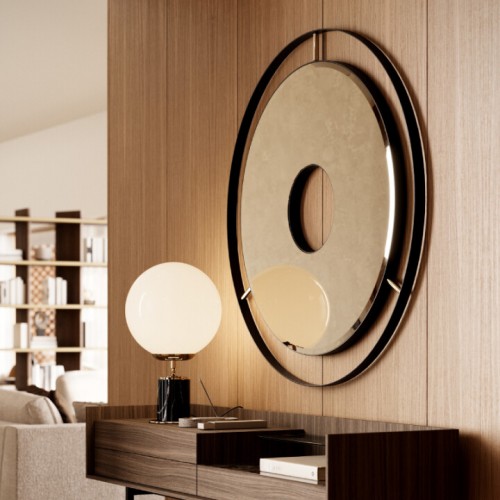
Light is a structural element, not an afterthought. Windows stay unobstructed or are dressed with sheer fabrics, and pale wall finishes amplify daylight throughout the day. In the areas where natural light is limited, well-positioned mirrors can extend luminosity.
In the evening, lighting should be warm, low in intensity and layered, with table lamps in natural materials such as ceramic, rattan or stone.
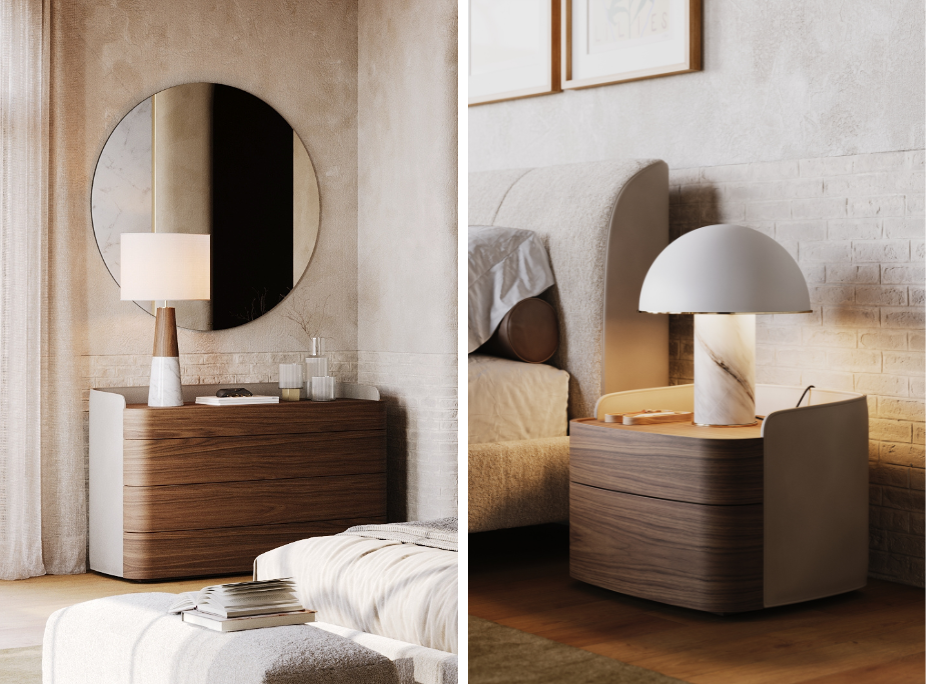
Round mirrors and warm ceramic lamps carry daylight further into the room and soften it come evening.
Decorative Accents
Ceramics and tiles bring texture and craft when used as deliberate accents, such as a feature wall panel or a table surface. Used selectively, they create impact. Used broadly, they become noise.
Plants complete the picture: miniature olive trees, lavender or aromatic herbs in terracotta pots add scale and a sensory dimension that makes a space feel inhabited.
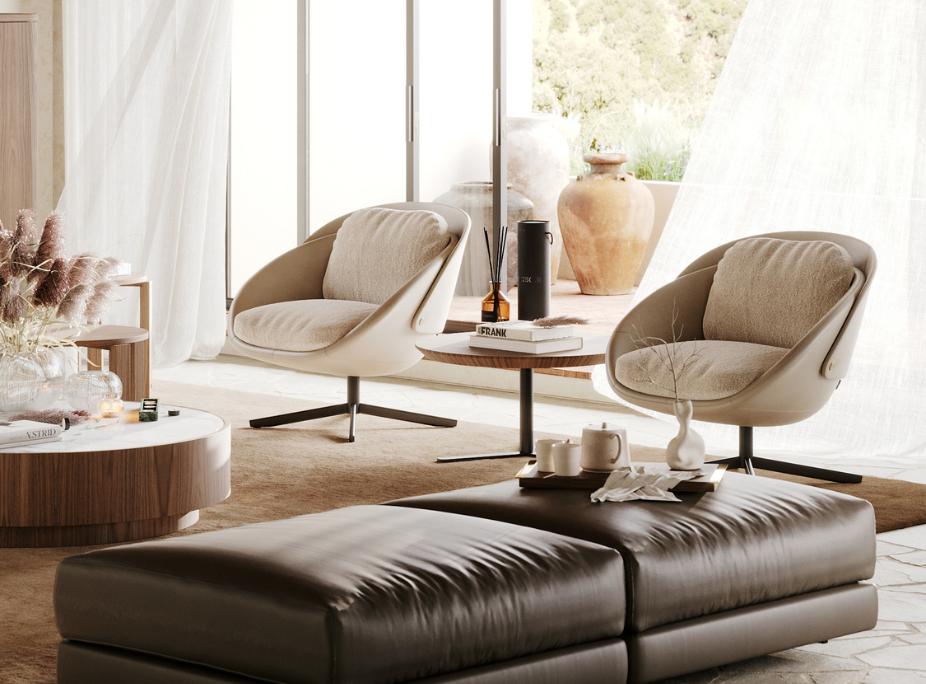
Terracotta vases, decoration books and natural textures give the seating area scale and craft.
Incorporating Mediterranean Style into Design Projects
The Mediterranean aesthetic translates across a wide range of projects. Key principles for specifying it well:
- Start with structural pieces. Sofas, beds, tables and armchairs in natural materials and neutral tones set the foundation. These are the hardest decisions to reverse.
- Build in layers. Add textiles, ceramics and accent colours once structural pieces are in place.
- Specify for durability. Materials that age authentically are a long-term value proposition. They will outlast synthetic alternatives.
- Calibrate the blue. Use it as an accent, never a structural colour. A cushion or a single decorative object is enough.
- Avoid synthetic substitutes. Vinyl stone, laminated wood and synthetic rattan read differently in texture, light and over time.
- Edit at the final stage. Restraint at the finishing stage often separates a resolved project from one that feels overwrought.
Mediterranean interior design endures because it was built on principles rather than trends: authentic materials, honest proportions and spaces designed to be lived in.
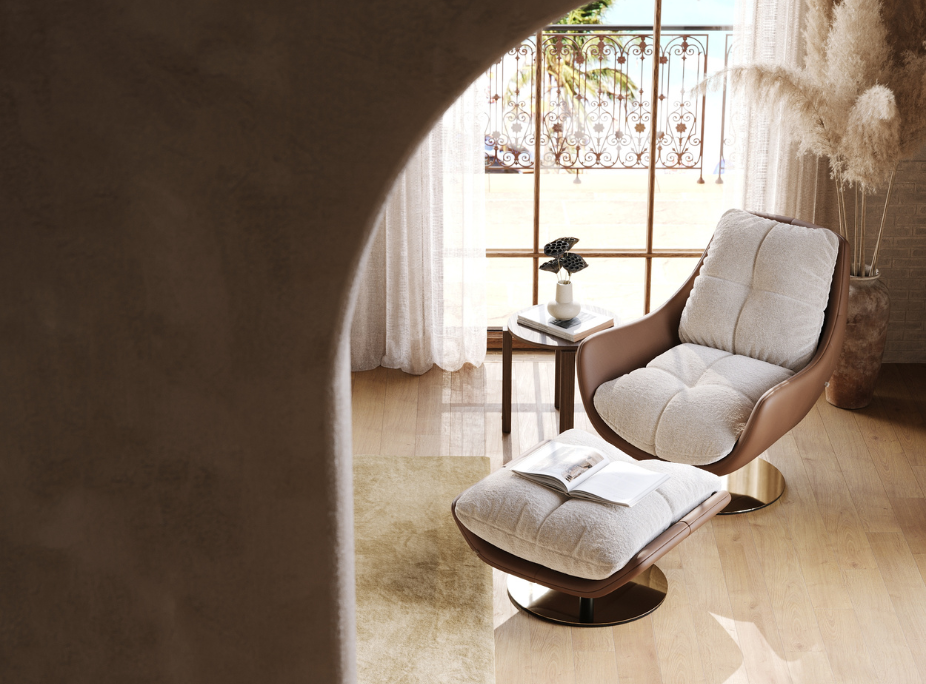
A reading corner where structure and comfort meet, framed by the view it was built to capture.
Turning these principles into a finished space, bringing them to a real project, starts with the right resources.
Explore our Lookbooks for project inspiration, request access to our Trade Programme for professional pricing and support, or order a Sample Box to evaluate materials and finishes before specifying.
Our team is available to support your project from specification through to delivery.