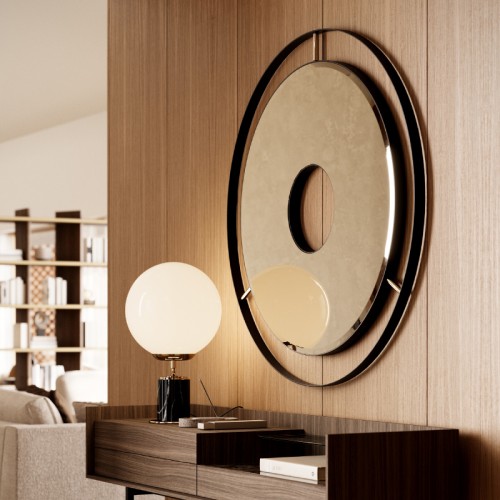
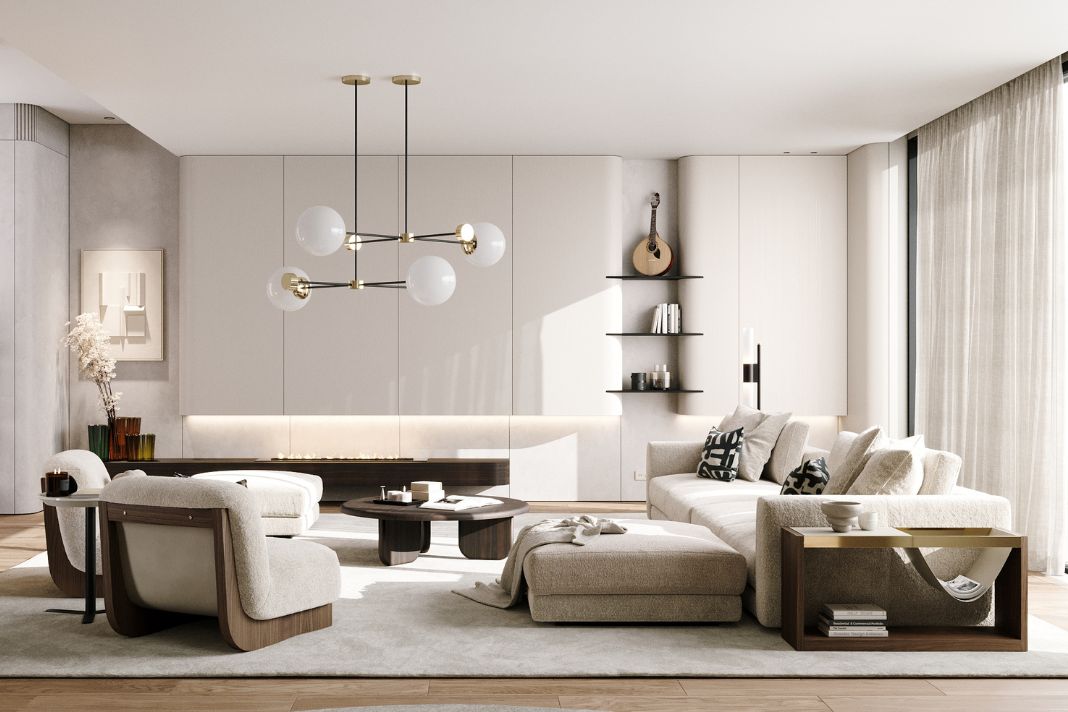
Neutral interiors are deceptively demanding. Without colour to carry the composition, everything else has to earn its place. Texture in interior design is not a finishing layer in these schemes, it’s the primary decision.
This article looks at ways to approach that, through material layering, surface contrast, and a more deliberate relationship with light.
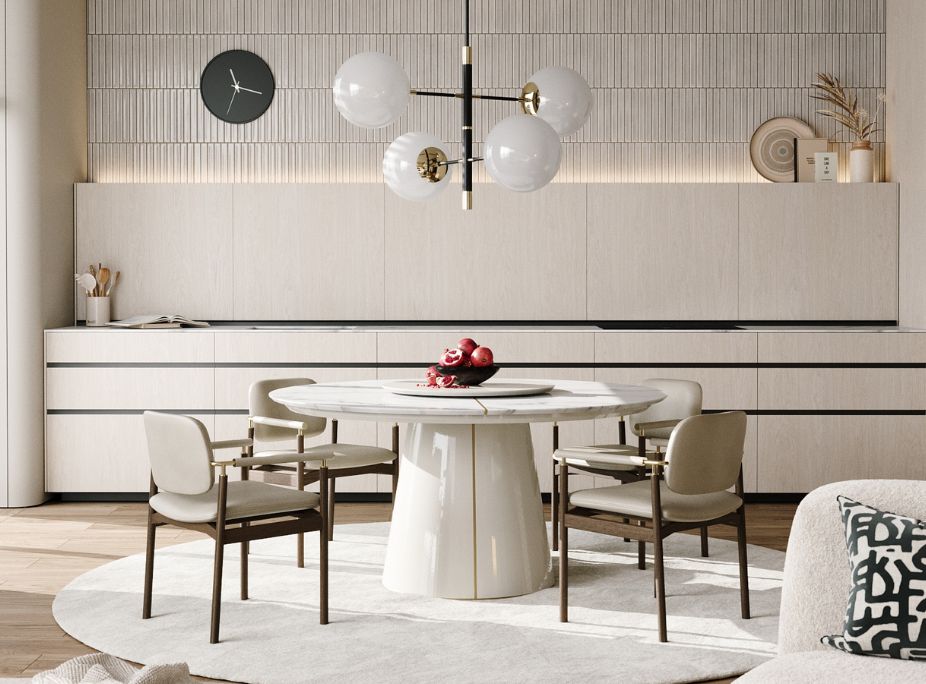
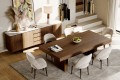
A neutral dining room where a ribbed wall panel, a marble table top, leather upholstery and a metal suspension lamp work together to create depth without a single accent colour. A reminder that in a well-specified interior, restraint and richness are not opposites.
Why Texture Has Become a Central Element
For years, the conversation around neutral spaces was dominated by palette: the exact shade, the colour balance, the finishes. This thinking can produce spaces that are coherent and stunning, but not necessarily sensory immersive.
A flat neutral surface reads as absence. A textured one reads as intention. When a client walks into a room layered with bouclé, honed stone and raw linen, they do not think "neutral". They convey warmth and attention to detail. The palette is still restrained, but the materials give it a voice.
For professionals working in this register, the material specification is where the design character of a neutral space is made or lost.
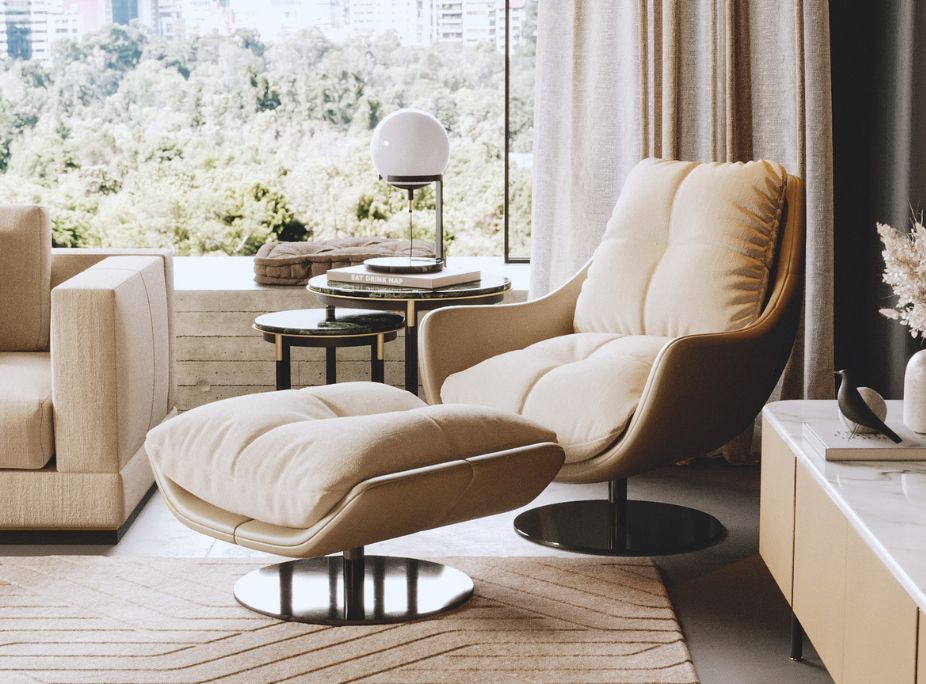
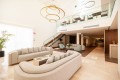
A generously upholstered armchair and ottoman in a warm cream fabric anchor a neutral living room with quiet confidence. The depth of the upholstery, the fabric rug beneath, and the diffused natural light from floor-to-ceiling windows create a composition that is tactile before it is visual.
How to Layer Materials Without Losing Coherence
The problem with texture-led interiors is not too little texture. It is too much, applied without structure. When everything competes at the same visual weight, the result is noise.
We recommend starting with an anchor, the material that carries the most area and sets the tactile baseline. A limewashed wall, a wide-plank timber floor, a substantial sofa in a fabric with real presence. From there, introduce contrast in surface quality, a polished element against the matte, a woven textile against something smooth. A third layer, used sparingly, adds the detail that rewards a closer look, like a patinated metal base, a hand-finished edge.
The goal is not to match textures but to relate them. Shared undertones and compatible scales are what keep a layered scheme coherent rather than restless.
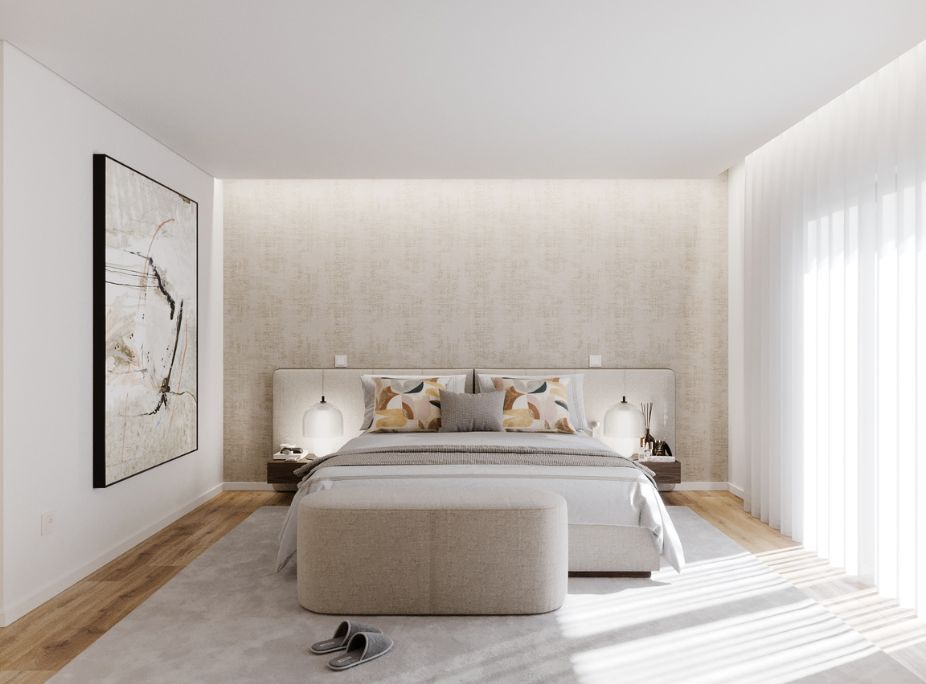
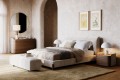
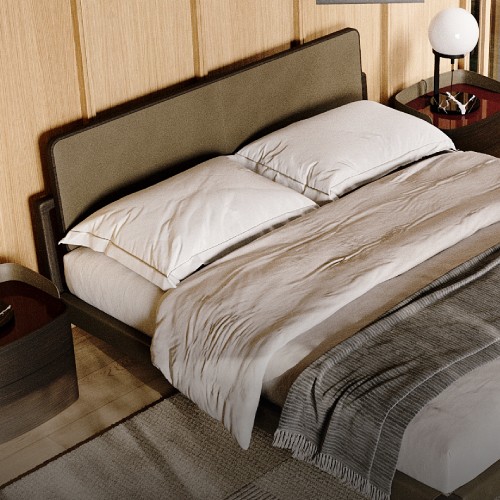
Natural light transforms a fabric-lined headboard wall into a study in texture and shadow. In neutral interiors, the relationship between surface and light is where the design character lives.
The Power of Surface Contrast in a Restrained Palette
In a neutral palette, visual tension has to come from somewhere other than colour. It comes from the relationship between surfaces: matt against gloss, rough against polished, soft against hard.
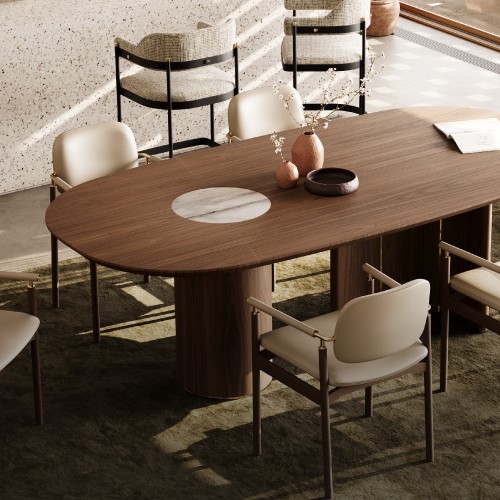
A dining table in marble or natural oak alongside dining chairs in a smooth upholstered fabric is a simple example of this working well. Neither piece is neutral in texture, but together they create the kind of quiet opposition that makes a room feel resolved. The same thinking applies at every scale, from a marble coffee table on a jute rug to a brushed brass side table beside a linen sofa.
In a neutral space, even small material oppositions register clearly. There is nothing else competing for attention.
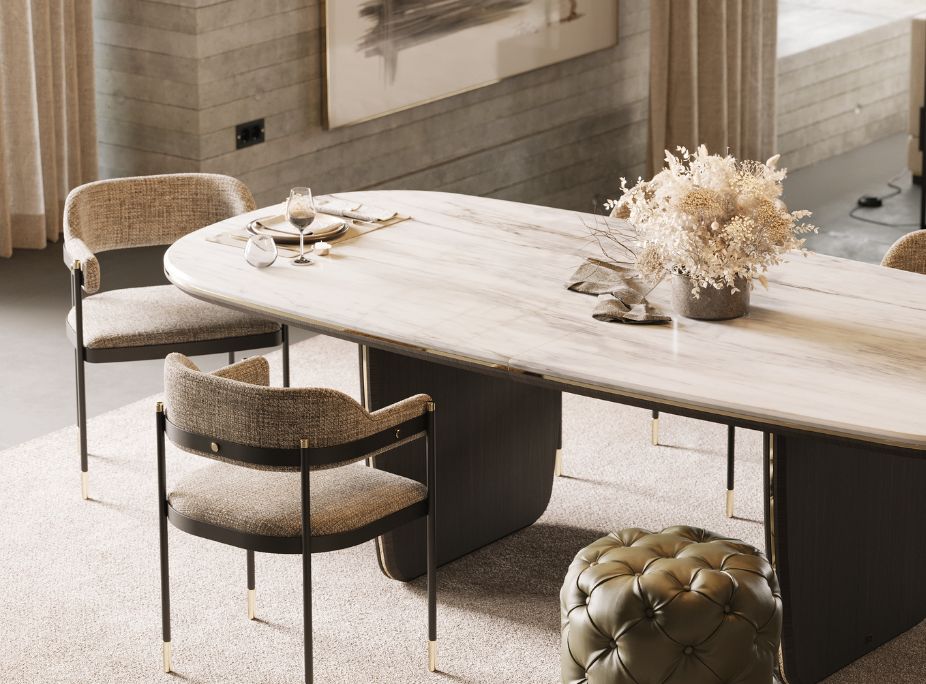
A marble table top, fabric dining chairs, a leather puff and a stone-clad wall in a single composition. The palette is entirely neutral, but the opposition between smooth and rough, soft and hard, is what gives the room its presence.
Light as the Final Layer
No discussion of texture in interior design is complete without addressing light, both natural and artificial. Light does not just make materials visible. In the right conditions, it is what makes them perform.
For professionals specifying lighting in neutral schemes, directional sources, whether floor lamps, table lights, or architectural downlights placed to graze a surface, are what complete the material picture. Natural light deserves the same consideration. How a fabric responds at noon versus late afternoon is part of the brief, not an afterthought.
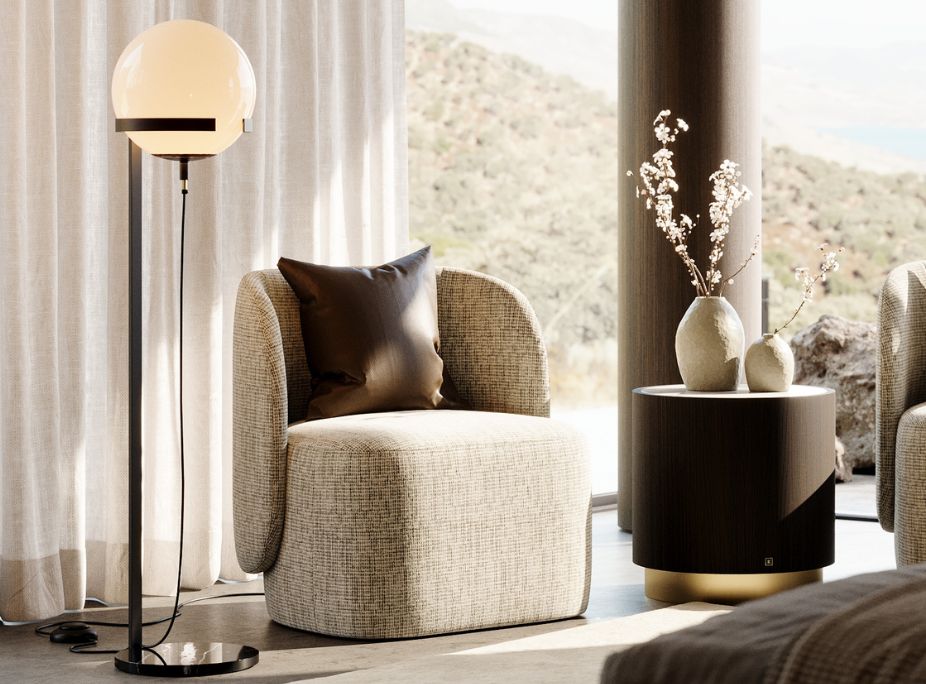
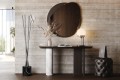
A floor lamp positioned beside an armchair does more than illuminate, it grazes the fabric surface and draws out its texture. Paired with a dark wood side table and sheer linen curtains, the composition shows how directional light completes a material scheme.
Upholstery as the Tactile Heart of the Project
Upholstered pieces carry the largest share of tactile experience in any interior. They are what end users actually live with day to day, and in a neutral scheme they are often the most expressive material element in the room.
The grain of a fabric, the density of a weave, the depth of a pile are not secondary decisions. A chaise longue in a deeply textured bouclé anchors a room differently from any smooth alternative. A richly woven headboard changes a bedroom without touching anything else.
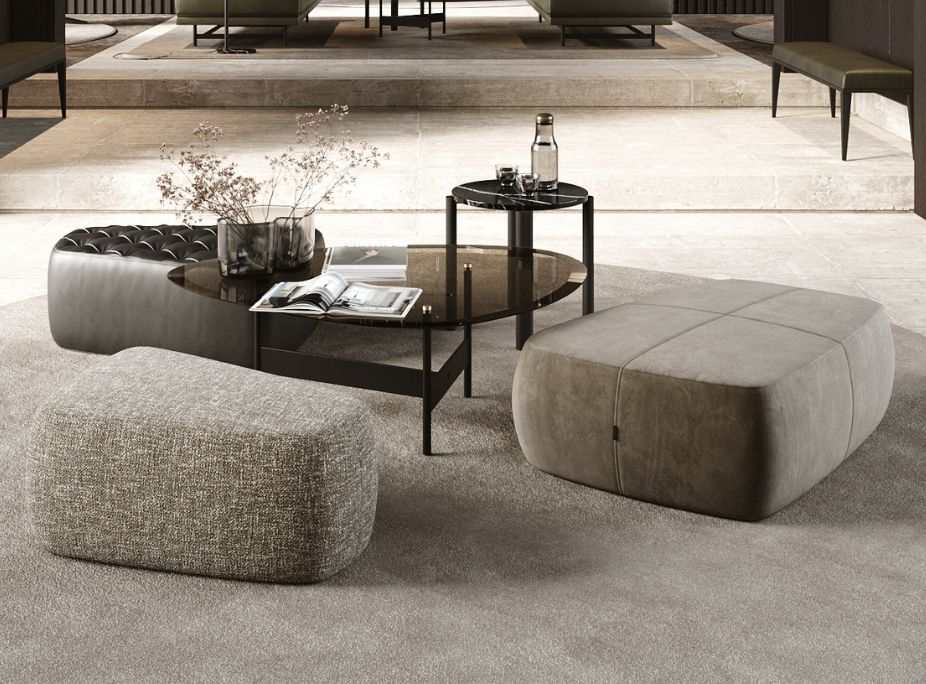
Three different fabric textures sit together on a honed stone floor, with a smoked glass coffee table at the centre. An example of how different fabrics match, without competing with each other, to enhance the decor.
At Laskasas, every piece of furniture and upholstery is fully customisable across materials, finishes and dimensions, so each project can be specified exactly as the design requires, from fabric construction to frame finish.
When layering, contrast and light are resolved together rather than applied in sequence. Neutral spaces feel deliberate. They feel like a place someone genuinely thought about, and that is exactly what a client remembers.